A higher-than-normal bill can indicate water loss, although irrigation and changing usage can also be responsible.
FOUNDATION LEAK GUIDE
Signs of a Slab Leak in a Fort Myers Home
It is rarely one dramatic puddle. Slab leaks often begin as small changes that become meaningful when they occur together.
Fort Myers area service inquiries
These clues become more useful when they appear together.
THE SHORT ANSWER
A suspected slab leak deserves investigation, but not every symptom is conclusive. The strongest clues usually connect a change in metered consumption, surface moisture, and the route of the plumbing system.

Open the full-size slab leak infographic ↗1. Unexplained high bill 2. Warm or hot floor spots 3. Low water pressure 4. Sounds of running water 5. Cracks in floors or walls 6. Mold or mildew growth 1. Water meter check 2. Pressure testing 3. Acoustic listening 4. Thermal imaging 5. Tracer gas detection 6. Moisture mapping
For easier reading on a phone, expand the signs and inspection methods below.
Read all 6 slab leak warning signs
A persistent warm area may occur above a leaking hot-water line, but temperature differences alone do not confirm a leak.
A pressure change may signal a plumbing issue; other causes include valves, fixtures and utility supply conditions.
Listen for a steady sound when fixtures, irrigation and appliances are off.
Cracking may have several causes, including movement or settlement. Look for accompanying moisture evidence.
Persistent dampness can encourage growth. Confirm where the moisture is coming from before choosing a repair.
Read the 6 common detection methods
Compare readings with water fixtures and other known users turned off.
A qualified professional isolates sections to check whether a pressurized line is losing pressure.
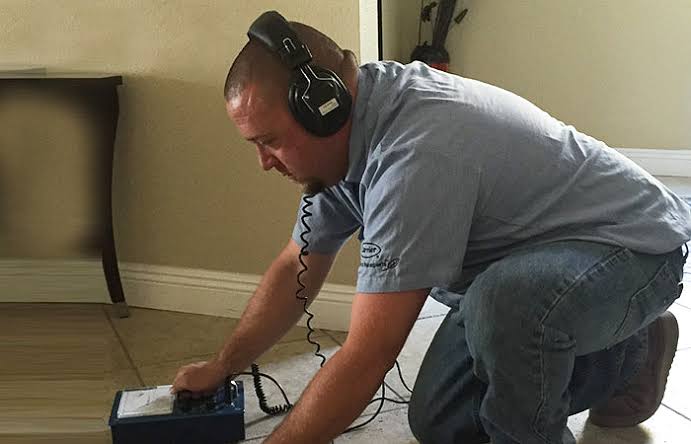
Specialized microphones can sometimes identify sounds associated with escaping water.
Infrared cameras show temperature differences that can support, but do not prove, a diagnosis.
Specialists may use an appropriate tracer gas and sensors to narrow a difficult leak, depending on the system.
Repeated moisture readings help trace the spread of dampness and identify areas needing investigation.
01 / 03
Four clues to write down
A floor that feels warm near one tile, the quiet sound of running water, discolored grout, and a rising bill may point toward a hot or cold line beneath the floor. The same house may also have condensation or rainfall-related moisture, so a pattern over several days is informative.
- Where the first warm or damp area appeared.
- Whether it changes after a shower, irrigation, or rain.
- Whether the leak indicator moves when use is stopped.
- Whether the house has had previous line repairs.
Take dated photos and keep a copy of recent utility usage if possible.
02 / 03
What an expert tests next
The initial goal is to confirm the affected system. A pressure test can indicate a line is losing pressure. Acoustic and thermal tools can support location when site conditions are suitable. A technician then weighs findings before recommending an opening or reroute.
- Confirm whether pressure loss is present.
- Narrow which section is affected.
- Assess likely location with appropriate tools.
- Review whether spot repair, reroute, or further diagnosis is sensible.
Diagnostic evidence matters more than an assumption based on a single floor stain.
03 / 03
What to do if water is spreading now
Where safe, close the house shutoff and move possessions away from wet flooring. Keep clear of electrical outlets and fixtures in wet areas. If the source is unknown, professional leak diagnosis can help prevent opening the wrong surface.
This guide is general information, not an on-site diagnosis.
COMMON QUESTIONS
Answers before you call.
Get a clear starting point for your next decision.
Are slab leaks common in concrete homes?
Any slab-on-grade home with plumbing routed beneath or through concrete can experience a leak, but symptoms alone cannot establish frequency or cause.
Can a slab leak cause a high bill?
Yes, a pressurized supply-line leak may lead to unexplained consumption. Compare your meter and bills with known water use.
Should I break the concrete to find a leak?
No. Confirming and narrowing the problem first can help avoid unnecessary openings.
START WITH AN ANSWER
Not sure where the leak is hiding?
Describe the symptoms, the property type, and what you have already checked.