A higher-than-normal bill can indicate water loss, although irrigation and changing usage can also be responsible.
SPECIALIZED LEAK DIAGNOSTICS
Slab Leak Detection Fort Myers FL
A warm patch on a tile floor is easy to dismiss. So is an unexpected water bill. Together, those clues may point beneath the concrete—and a targeted investigation can help you understand what is actually happening.
Fort Myers area service inquiries
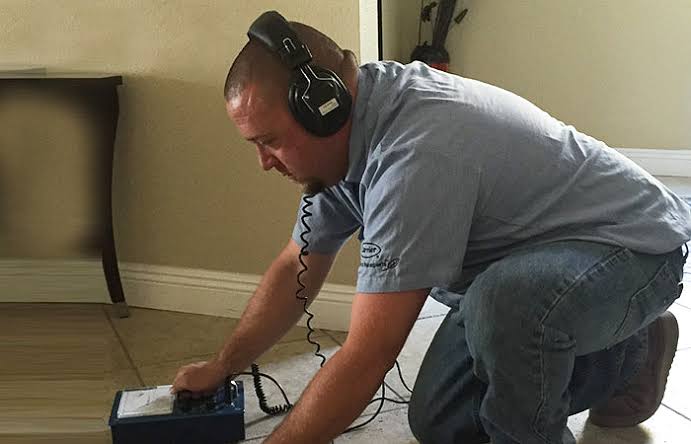
Acoustic listening is one of several tools used during slab leak diagnosis.
THE SHORT ANSWER
A slab leak is a leak in a pipe that runs beneath or within a building’s concrete foundation. The first goal is to identify the affected line and narrow the suspected location before choosing a repair approach.

Open the full-size slab leak infographic ↗1. Unexplained high bill 2. Warm or hot floor spots 3. Low water pressure 4. Sounds of running water 5. Cracks in floors or walls 6. Mold or mildew growth 1. Water meter check 2. Pressure testing 3. Acoustic listening 4. Thermal imaging 5. Tracer gas detection 6. Moisture mapping
For easier reading on a phone, expand the signs and inspection methods below.
Read all 6 slab leak warning signs
A persistent warm area may occur above a leaking hot-water line, but temperature differences alone do not confirm a leak.
A pressure change may signal a plumbing issue; other causes include valves, fixtures and utility supply conditions.
Listen for a steady sound when fixtures, irrigation and appliances are off.
Cracking may have several causes, including movement or settlement. Look for accompanying moisture evidence.
Persistent dampness can encourage growth. Confirm where the moisture is coming from before choosing a repair.
Read the 6 common detection methods
Compare readings with water fixtures and other known users turned off.
A qualified professional isolates sections to check whether a pressurized line is losing pressure.
Specialized microphones can sometimes identify sounds associated with escaping water.
Infrared cameras show temperature differences that can support, but do not prove, a diagnosis.
Specialists may use an appropriate tracer gas and sensors to narrow a difficult leak, depending on the system.
Repeated moisture readings help trace the spread of dampness and identify areas needing investigation.
01 / 04
The warning signs people notice first
Not every wet floor means a slab leak. A failing shower seal, an overflowing air-conditioning drain, or water entering from outdoors can produce similar symptoms. The pattern matters more than any single sign.
- A floor that stays unusually warm in one area, especially where hot-water plumbing runs.
- Water-meter movement when all fixtures and irrigation are off.
- Moisture appearing at baseboards or along flooring without a visible fixture leak.
- A recurring sound of moving water even when household taps are closed.
If the surface is wet, do not assume breaking the concrete is the first step. Confirm that plumbing is involved and isolate the system where practical.
02 / 04
How a careful slab-leak investigation works
A diagnostic visit starts with the history of the problem: where the moisture appears, when the bill changed, whether the sound stops after a valve closes, and what type of pipes serve the home. From there, a technician may compare pressure between sections, use acoustic equipment, check temperature patterns, or take moisture readings. No single tool proves every kind of leak.
- Confirm that a leak is present on the suspected system.
- Distinguish a hot-water line from a cold-water or drainage issue where possible.
- Reduce the search area with the appropriate diagnostic method.
- Discuss evidence and access options before opening a floor.
Thermal imaging detects surface temperature differences, not a leak directly. A clear assessment combines the image with other observations.
03 / 04
What happens after the location is identified?
The correct repair depends on pipe condition, access, and how the line is routed. For a short, accessible failure, a targeted repair may make sense. When several lines are failing or the route is impractical, a licensed plumbing contractor may recommend rerouting or replacement instead.
- Spot repair: reach the damaged pipe through a limited opening where feasible.
- Reroute: replace the affected run with a new, more accessible path.
- Evaluate other causes: investigate waterproofing or drainage when pressure testing does not support a supply leak.
Ask for a clear explanation of the diagnosis and the repair scope before work begins.
04 / 04
Fort Myers considerations
In Southwest Florida, slab construction and humid conditions can make dampness difficult to interpret. Moisture may travel under flooring before showing on the surface, and rain intrusion can resemble a plumbing problem. A local assessment should consider recent weather, air-conditioning condensation, and plumbing use—not just the visible stain.
If water is actively spreading, shut off the appropriate supply valve if safe and keep electrical equipment away from wet areas.
HOMEOWNER ARTICLES
More slab leak and hidden leak articles
These informational guides expand the site’s coverage with practical answers, stronger semantic relevance, and more internal links around slab leak diagnosis.
INFO ARTICLE
What Causes Slab Leaks in Fort Myers Homes?
Learn how pipe age, corrosion, shifting soil, abrasion, and installation issues can lead to under-slab leaks.
INFO ARTICLEHidden Water Leak Signs Homeowners Should Not Ignore
See how damp drywall, rising bills, mold, low pressure, and meter movement can point to a concealed leak.
INFO ARTICLESlab Leak Repair Options: Spot Repair vs. Reroute
Understand the differences between local repair access, rerouting, repiping, and what questions to ask next.
COMMON QUESTIONS
Answers before you call.
Get a clear starting point for your next decision.
What is slab leak detection?
It is the process of confirming and narrowing a suspected pipe leak below or within a concrete floor using observations, plumbing isolation, and diagnostic equipment when appropriate.
Does a warm floor always mean a slab leak?
No. Sun exposure, heating equipment, or normal surface-temperature differences can create warm areas. The symptom is worth investigating when it appears with pressure loss, water use, or unexplained moisture.
Can a slab leak be located without breaking concrete?
It is often possible to narrow the likely location with acoustic, pressure, and temperature checks before opening the slab. The amount of access needed depends on the pipe and conditions.
Should I repair or reroute a slab pipe?
That decision depends on pipe age, material, leak location, prior failures, and access. A qualified contractor should explain the tradeoffs after the diagnosis.
RELATED ANSWERS
Read before making the next decision
Explore the specific questions that often come up with this type of leak.
6 signs of a slab leakWhat warm floors, pressure changes and unexpected bills can tell you.↗Why slab pipes failPipe wear, abrasion, pressure and building movement.↗Repair or reroute?Compare repair approaches after the problem is confirmed.↗What changes the diagnostic cost?Questions to ask before a service visit.↗
START WITH AN ANSWER
Not sure where the leak is hiding?
Describe the symptoms, the property type, and what you have already checked.